
Dear Ayrshire Skincare Family,
Is the olive oil in my bottle really what it says it is?
It’s an unfortunate reality that, from time to time, products don’t always turn out to be exactly what we expect them to be. While most manufacturers and retailers work hard to maintain high standards, occasional cases of mislabelling or food fraud remind us that consumers can benefit from asking questions about what they buy.
As I sat eating my lunchtime salad the other day, generously drizzling olive oil over it—as I always do—I found myself wondering just how much I really knew about the bottle in my kitchen. That question led me down an unexpected path of research, and what I discovered was both fascinating and thought-provoking.
At Ayrshire Skincare, authenticity in oils is something we take seriously — indeed every ingredient we use is purchased from suppliers that we have traded with for years. So we know exactly what we’re paying for, but it struck me that perhaps the same scrutiny should apply to the olive oil sitting in any of our kitchen cupboards.
Before I explain why I use olive oil so generously, I read up on what makes olive oil genuine, in the hope that it may help us all to have confidence in what we are purchasing. 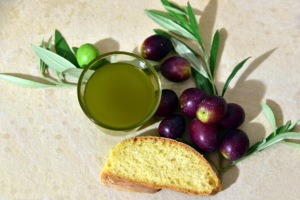
Olive oil, rich in antioxidants, it’s linked to heart health, and central to Mediterranean diets. That reputation, combined with a high price tag, has sadly made it one of the most targeted products in food fraud worldwide.
But I wanted to understand what that means for our health and our wallets. After all, it matters to UK shoppers — myself included. Here’s what I found.
Why Extra-Virgin Olive Oil Matters
The world’s longest-lived populations — the “blue zones” of Okinawa, Sardinia, Ikaria, Nicoya, and Loma Linda — share a plant-based diet, daily movement, and low stress. Extra-virgin olive oil (EVOO) is a daily staple in several of these diets, and it’s linked to real benefits: supporting heart health, lowering blood pressure and LDL cholesterol, and reducing unwanted clotting. Preliminary evidence also points to possible protection against cancer and Alzheimer’s, though more human research is needed.
One striking data point: a University of Milan study of 27,000 people found that 3–4 tablespoons of olive oil a day was associated with significantly lower risk across several cancers — including a 70% reduction in oesophageal cancer risk and a 60% reduction in laryngeal and oral/pharyngeal cancer risk. That’s part of why I add a generous drizzle to my salad every day, as pictured.
Why Olive Oil Is Such a Common Fraud Target
EVOO is the most expensive olive oil grade, which creates a strong incentive to fake it — typically by blending in cheap seed oils, mislabelling refined oil as extra virgin, adding colourants for a “fresher” look, or falsifying country of origin. Because most consumers can’t verify authenticity by sight or smell, this fraud is hard to catch.
The problem isn’t new — concerns date back to 2011, when the European Commission introduced tighter supply chain controls. But climate change has made it worse: repeated droughts since 2022 have driven up prices and, with them, the incentive to cheat. The EU logged a record number of suspected fraud cases in 2024, and the UK’s Food Standards Agency named extreme weather a key driver of rising food fraud. Europol–Interpol operations regularly flag edible oils among Europe’s most adulterated food categories, with recent seizures involving hundreds of thousands of litres of mislabelled oil.
What’s Actually at Stake
Financial deception — paying premium prices for a product that isn’t what it claims.
Loss of health benefits — genuine EVOO’s polyphenols (its key antioxidants) are diluted or absent in adulterated oil, and drought has reduced polyphenol levels even in authentic oil.
Rare but serious safety risks — most fraud is relatively benign (like blending with sunflower oil), but a historical case in Morocco saw olive oil adulterated with jet engine lubricant, sickening 10,000 people. It’s a reminder of why regulatory testing matters.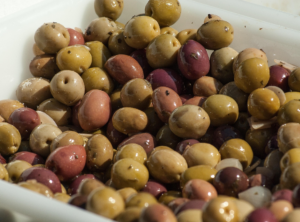
Is it actually a Problem on UK Shelves Right Now?
Reassuringly, yes — mostly not. A comprehensive 2024 independent testing programme examined the top 15 retail and supermarket own-brands and found no undisclosed blending with seed oils. Fraud is concentrated at the cheap, obscure end of the market — particularly unbranded products from third-party online marketplaces — not on recognisable supermarket shelves.
How to Protect Yourself
Be wary of prices that seem too good to be true — genuine EVOO is expensive to produce, especially with recent harvest shortages.
Check for “PDO/PGI certification” and full origin labelling (producer, harvest date, batch number).
Buy dark glass bottles or tins — light degrades oil quality.
Trust your senses — genuine EVOO tastes fruity, slightly bitter, and peppery (nips the back of the throat); flat or musty flavour suggests fraud or poor quality.
Stick to established retailers rather than unfamiliar online sellers.
Report concerns to the Food Standards Agency.
Try the “Granny Test”: chill the bottle to fridge temperature (4°C) — decent oil turns cloudy.
Harvest date matters most. Look for an actual harvest date, not just “best before.” Polyphenols and flavour fade over time, so oil within 12–18 months of harvest is ideal — no harvest date at all is a red flag.
What’s PDO and PGI?
PDO (Protected Designation of Origin) — the strictest standard. Every stage, from growing to bottling, must happen in a specific defined region using traditional methods.
PGI (Protected Geographical Indication) — more flexible. At least one production stage must happen in the named region, but bottling can happen elsewhere.
Both are legally verified and inspected, making them far harder to fake than a generic “Product of Italy” claim. They guarantee genuine origin and traceability — though not necessarily higher subjective quality. Since Brexit, EU-origin oils sold in the UK (still the majority) carry their original PDO/PGI marks, which remain valid.
The Bottom Line
Olive oil fraud is real and growing across Europe, worsened by climate pressure on supply. But for UK shoppers buying recognisable supermarket brands, the picture is less alarming than headlines suggest — the fraud is concentrated at the cheap, obscure end of the market. The smart approach isn’t panic, but a bit of scepticism: favour transparent labelling, established retailers, and prices that reflect what good oil actually costs to produce.
And if you have read to here – My bonus
By choosing monovarietal olive oils, which are made with only one type of olive, you can choose a product made from olives for best health. Particularly these come from Koroneiki (Greece), Moraiolo (Italy) and Picual (Spain). The oils from these olives have great flavour profiles that work well for cooking, salad dressings or mopping up with bread.
With our kindest regards
Jim and the team at Ayrshire Skincare Team
Shop online: https://ayrshireskincare.co.uk
Questions? We’d love to hear from you at reach@ayrshireskincare.co.uk